Aruba
A sunny Dutch island in the southern Caribbean, off Venezuela: dry land, cactus and beaches, a mixed population and a language of its own, Papiamento.
+ Spanish, English
At a glance
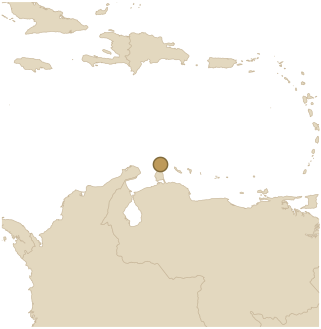
Aruba is a small island in the southern Caribbean, only a few dozen kilometres off the coast of Venezuela. It is an autonomous country within the Kingdom of the Netherlands, with its own government. About 110,000 people live there; the capital, Oranjestad, still has brightly painted Dutch colonial façades. The population is thoroughly mixed (Caquetío Amerindian roots, with European, African and South American strands) and speaks a language of its own, Papiamento. The island is dry and sunny, lies outside the hurricane belt, and lives mostly from beach tourism.
Geography
Aruba is a desert island: flat, dry and swept by the trade winds, nothing like the jungle people picture in the Caribbean. Cactus, aloe and divi-divi trees, bent flat by the wind, grow on ochre rocky ground broken by large boulders. The sheltered south-west coast has white sand beaches and turquoise water among the best known in the Caribbean. The wild north coast takes the full force of the waves. Lying outside the hurricane belt, the island is hot and dry all year.
History
Aruba's first inhabitants were the Caquetío, an Arawak people from the nearby mainland whose genetic trace is still strong. The Spanish landed in 1499. Unlike other islands, Aruba never really had plantations: the Spanish judged it "useless" and removed part of its population. The Dutch took it in 1636 and ran it as a trading post, and the population rebuilt itself through intermarriage. In the 20th century a huge refinery for Venezuelan oil transformed the island, bringing wealth and immigrants. In 1986 Aruba became a separate autonomous country within the kingdom, and today it lives from tourism.
Language and faith
Everyone in Aruba speaks Papiamento, a creole born in these islands, based on Portuguese and Spanish with Dutch, African and Amerindian elements. Dutch, official alongside Papiamento, is still the language of school, and Spanish and English are widely spoken. The island is mostly Catholic, a tradition reinforced by the nearby Spanish-speaking world, with Protestant communities that go back to the Dutch connection.
Culture and way of life
Aruban culture mixes Amerindian, European, African and South American influences. Music and dance follow Caribbean and Latin rhythms, and the carnival, one of the most eagerly awaited in the region, has its parades, costumes and queen. There are also the brightly painted colonial houses, local crafts and aloe, long the island's main source of wealth. The food draws on all these roots: keshi yena (stuffed cheese), pastechi (fried pastries), fresh fish, and Venezuelan and Dutch flavours.