Anguilla
A small, flat British island in the northern Antilles, with some of the finest beaches in the Caribbean and an Afro-Caribbean community with a strong independent streak.
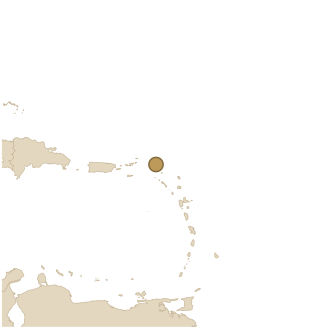
At a glance
Anguilla is a small British island in the northern Lesser Antilles, close to Saint Martin. A British overseas territory, it has about 16,000 people, and its main town is The Valley. Most of the population is Afro-Caribbean, descended from the slaves of the old plantations. Flat and quiet, the island stays away from mass tourism: it is known for its white-sand beaches, often ranked among the best in the world, and for upmarket tourism. Its history has one unusual episode: in the 1960s, Anguillians rebelled in order to stay British, refusing to be joined to another state.
Geography
Anguilla is a low, flat, dry coral island; its name, "the eel", comes from its long, narrow shape. Unlike its volcanic neighbours, it has no mountains or rivers, just scrub, salt ponds and limestone. What it does have is some thirty beaches of fine white sand on turquoise water, which made its name. Uninhabited cays and islets surround it, home to reefs and seabirds. The climate is tropical, hot and dry, and the island lies in the path of hurricanes.
History
The Arawak Amerindians, the first inhabitants, called the island Malliouhana. The British colonised it from 1650. The flat, dry land was poorly suited to large plantations, but sugar cane and cotton were grown there with African slaves, the ancestors of today's population. After abolition in 1834, Anguillians were poor and lived from fishing, salt and emigration. In 1967, during decolonisation, the island refused to be merged into the state of Saint Kitts and Nevis and rose up to stay under the British Crown: this was the Anguillian "revolution", a rare case of a people rebelling in order to remain a colony. It got its way and became a separate British territory.
Language and faith
Anguillians speak English, along with a creole with Caribbean inflections. The island is strongly Christian and churchgoing, mostly Protestant: Anglican, Methodist and various evangelical churches all have a large following. Religion plays a big part in the life of this small community, with its religious holidays and a quiet Sunday.
Culture and way of life
Anguillian culture is Afro-Caribbean and looks to the sea. The island's most popular sport is boat racing in traditional sailing boats, descended from the old fishing craft and fiercely contested at the big regattas. There is also Caribbean music and the summer carnival. The food is built on seafood: grilled spiny lobster, conch, fresh fish, and rice and peas, with creole seasoning.