Antigua and Barbuda
Two islands in the Lesser Antilles with "365 beaches", a former British naval base, whose people are mostly of African descent.
+ Antiguan Creole
At a glance
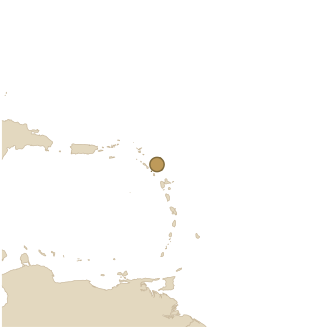
Antigua and Barbuda is a small country in the Lesser Antilles, in the eastern Caribbean, made up of two main islands. Fewer than 100,000 people live there, nearly all on Antigua, around the capital, Saint John's; wilder Barbuda has very few inhabitants. The great majority of Antiguans are of African descent, with a Caribbean culture shaped by the long British presence. Antigua is said to have "365 beaches", one for every day of the year: beach tourism and sailing keep the country going, and it was once a stronghold of the Royal Navy in the West Indies.
Geography
Antigua is a fairly low, dry island with gentle hills and a deeply indented coast: coves, sheltered bays and countless white and pink sand beaches on turquoise water. Its deep natural harbours made it an ideal naval base. Its neighbour Barbuda is a flat, wild coral island ringed by lagoons and reefs, home to one of the largest frigatebird colonies in the world. A third islet, uninhabited Redonda, completes the country. The climate is tropical, sunny and breezy, and the islands lie in the path of Atlantic hurricanes.
History
The islands were home to Amerindian peoples when the English colonised them in 1632. They planted sugar cane, worked by thousands of enslaved Africans, the ancestors of most of today's population. Antigua's harbours became a key Royal Navy base in the Caribbean: the future Admiral Nelson served there, and "Nelson's Dockyard" is now a World Heritage Site. Slavery was abolished in 1834; the island stayed British until independence in 1981 and is still part of the Commonwealth.
Language and faith
The official language is English, but in everyday life Antiguans speak an English-based creole, musical and full of imagery. The country is strongly Christian, with a solid Anglican tradition from British times alongside other Protestant churches and Catholicism. There are churches everywhere and faith plays a big part in social life, with traditions of African origin in the background.
Culture and way of life
Antiguan culture is Afro-Caribbean and festive. The highlight of the year is the summer Carnival, which celebrates emancipation with costumes, calypso, soca and steelpan. The island is passionate about cricket, inherited from England, and has given it some of the greatest players of all time, such as Viv Richards, a national hero. The national dish is fungee (a cornmeal dish) with pepperpot, a stew of vegetables and meat; there is also salt fish, seafood and rum.