Burundi
A small country of hills in the middle of Africa, at the sources of the Nile and on Lake Tanganyika, the land of the great royal drums.
economic seat: Bujumbura
+ Swahili
At a glance
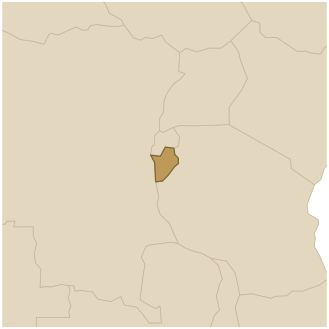
Burundi is a small landlocked country in East Africa, on the highlands of the Great Lakes region. Like Rwanda, its close neighbour, it is a "land of a thousand hills" and very densely populated: thirteen million people on a small territory. It also shares with Rwanda a painful history of tension between Hutu and Tutsi. The political capital is now Gitega, in the middle of the country, while Bujumbura, on the lake, remains the economic centre. Burundi is one of the poorest countries in the world.
Geography
Burundi is a country of hills and highlands farmed right to the top, with a mild climate despite being close to the equator. To the west, the land drops to Lake Tanganyika, one of the longest and deepest lakes in the world, rich in fish, which the country shares with its neighbours. One of the southernmost sources of the Nile also rises in Burundi's hills. Rivers run between the hills, through marshes, patches of forest, terraces, banana groves and tea and coffee plantations.
History
For centuries Burundi was a powerful, well-organised kingdom, ruled by a king, the mwami. The colonisers, first German and then Belgian, hardened the distinction between Hutu and Tutsi there, as in Rwanda, even though the two groups share the same language and culture. After independence in 1962, this divide led to repeated massacres and a long civil war (1993–2005). The country, poor and fragile, has been seeking peace and reconciliation ever since.
Languages and faith
Unusually for Africa, almost all Burundians share the same mother tongue, Kirundi, a Bantu language, as in neighbouring Rwanda. French and Swahili are also used. Burundi is overwhelmingly Christian, mostly Catholic; the memory of the old religion, with its creator god Imana and respect for the ancestors, is still there. Proverbs, folk tales and oral wisdom play a large part in social life.
Culture and way of life
The best-known symbol of Burundian culture is the drums of Burundi. These great drums (ingoma), once tied to the monarchy, are played by troupes of drummer-dancers, an art on UNESCO's intangible heritage list. There is also the warrior dance, fine basketwork, and a rich oral tradition of tales and riddles. Life is organised around the hill and the extended family, and the staple foods are beans, bananas and sweet potatoes.