Saint Barthélemy
A small French island in the Antilles, long settled by Breton and Norman fishermen, Swedish for a time, and now a luxury destination.
+ English; an old Norman dialect
At a glance
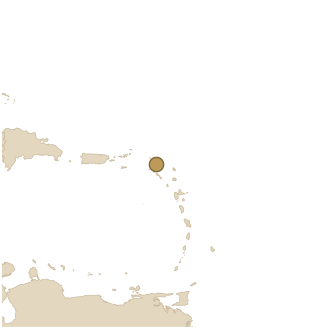
Saint Barthélemy, or "St Barts", is a small French island in the Lesser Antilles, north of Guadeloupe; it is a self-governing overseas collectivity. About 10,000 people live there, around the harbour of Gustavia. Its history is unusual for the Caribbean: too dry for sugar cane, the island had almost no plantations or large-scale slavery, and was settled for a long time by Breton and Norman fishermen and farmers, many of them poor. It was also Swedish for nearly a century, which is where its main town gets its name. Today St Barts is a luxury destination known around the world.
Geography
Saint Barthélemy is a hilly, dry island, with scrub and cactus on its slopes and no rivers, and it was short of water for a long time. Its deeply indented coast has many bays and about twenty white-sand beaches, among the most beautiful in the Antilles. The small harbour of Gustavia, at the head of an inlet, is lined with yachts and red-roofed houses. Uninhabited islets, protected as a nature reserve, surround the island and shelter turtles and seabirds. The climate is tropical, hot and dry; big hurricanes do sometimes hit, as Irma did in 2017.
History
Visited by the Kalinago Amerindians, the island was colonised by France from 1648, but its dry soil discouraged plantations: it was settled mainly by poor fishing and farming families from Brittany, Normandy and the Vendée, so that its population is mostly of European origin, a rare case in the Antilles. In 1784 France ceded the island to Sweden in exchange for trading rights; it stayed Swedish for nearly a century, and its harbour, renamed Gustavia after King Gustav III, became a thriving free port. Returned to France in 1878, it lived a modest, isolated life until upmarket tourism transformed it in the 20th century. It became a separate overseas collectivity in 2007.
Language and faith
The official language is French, and English is widely spoken because of tourism. Older people kept an island dialect of Norman French, a reminder of the island's origins, which has now almost disappeared. Unlike the rest of the Antilles, there is hardly any African-based creole, which reflects how the island was settled. The island is traditionally Catholic: the French settlers' faith mattered a great deal in these fishing and farming communities, where people prayed for those at sea, and the churches and saints' days still show it.
Culture and way of life
The culture of Saint Barthélemy is French and island-bred, shaped by its European fishing roots and its Swedish past, and today by luxury tourism from all over the world. Older people remember the traditional bonnets, the quichenottes, the palm-leaf basketwork and the hard life of the past. Village saints' day festivals, regattas and carnival liven up the year. The cooking mixes Creole and French traditions with seafood: spiny lobster, grilled fish, accras (fritters).