Cayman Islands
Three British islands in the Caribbean, once home to sailors and turtle hunters, now one of the world's major financial centres, with a population of European and African descent.
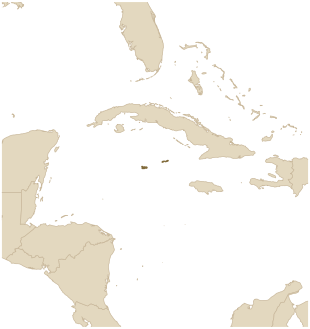
three islands
At a glance
The Cayman Islands are a small British archipelago in the Caribbean, south of Cuba, made up of three islands: Grand Cayman, the most populated, Little Cayman and Cayman Brac. A British overseas territory, they have about 70,000 people, around the capital, George Town. Once islands of sailors, turtle hunters and boat-builders, they became in the 20th century one of the world's biggest financial centres and tax havens. The population, of European and African descent, also includes many expatriates who came to work in finance.
Geography
The Cayman Islands are low, flat islands, the tops of an undersea ridge, covered in scrub and mangroves. Grand Cayman wraps around a wide inland lagoon, the North Sound. The islands' wealth is in the sea: white-sand beaches, including Seven Mile Beach, and very clear water that makes the Caymans a major diving destination, with wall dives, wrecks and the famous sandbar where stingrays gather. The climate is hot and tropical, and the islands are exposed to hurricanes.
History
Sighted by Columbus in 1503 and at first uninhabited, the islands were named "Las Tortugas" for the turtles that teemed there and drew sailors; their present name comes from caimans, the crocodiles that also lived there. They were settled slowly from the 17th century by British colonists, sailors, castaways and deserters, along with enslaved Africans. Governed from neighbouring Jamaica, they stayed British when Jamaica became independent. Long poor, living from the sea and shipbuilding, the Caymans changed completely from the 1960s on, becoming a major offshore financial centre.
Language and faith
Caymanians speak English, with a local Caribbean accent, and the many expatriates have brought plenty of other languages. The islands are strongly Christian and churchgoing, mostly Protestant: Presbyterian, Baptist, Anglican and various evangelical churches all have a large following. Religion matters a great deal in social life, and Sunday is still kept, despite the cosmopolitan crowd brought in by international finance.
Culture and way of life
Caymanian culture is Caribbean and seafaring, handed down from sailors, turtle hunters and schooner builders. It has its wooden boats and regattas, its basketwork, its black coral jewellery, its Caribbean music, and its big festival, Pirates Week. Life is lived between sea and beach, diving and sailing. The food is built on seafood: traditional turtle (now farmed), fish and conch, heavy cake, a dense cake of cassava or sweet potato, and tropical fruit.