Dominica
The "Nature Island" of the Caribbean, a land of forests, volcanoes and rivers, home to the last Carib people of the Antilles.
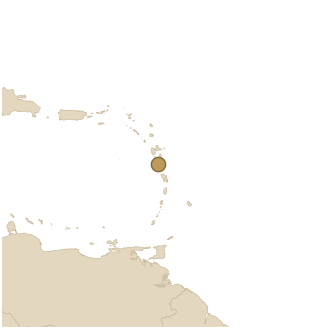
+ Dominican Creole
At a glance
Dominica, not to be confused with the Dominican Republic, is a mountainous island in the Lesser Antilles, between Guadeloupe and Martinique. It is nicknamed the "Nature Island" of the Caribbean: the wildest and greenest island in the Antilles chain, far from mass tourism, all forest, volcanoes and rivers. About 70,000 people live there, mostly of African descent, around the capital, Roseau. The island is home to the last community of the Carib people, the Kalinago, the first inhabitants of the Antilles.
Geography
Dominica is a young volcanic island, the most mountainous in the Lesser Antilles, covered in very dense primeval rainforest, part of which is a World Heritage Site. It is said to have a river for every day of the year, countless waterfalls and, above all, the Boiling Lake, the second-largest boiling hot spring in the world, at the bottom of a steaming valley. Volcanoes, sulphur springs, gorges and forests make it a hiking destination. The steep coasts often have black-sand beaches.
History
Dominica was one of the last refuges of the Kalinago (Caribs), an Amerindian people of the Antilles who, helped by the island's steep terrain, held out against the Europeans for a long time; a territory is reserved for them today, a unique case in the Antilles. Fiercely contested between the French and the English, the island later saw plantations worked by enslaved Africans, the ancestors of most of the population. Eventually British, Dominica has been independent since 1978. In recent years it has had to recover from violent hurricanes.
Languages and faith
The official language is English, but much of the population speaks Dominican Creole (Kwéyòl), which is French-based, a legacy of French rule and of the nearby French islands of Guadeloupe and Martinique. Dominica is largely Catholic, another French legacy, with Protestant communities. The Kalinago keep some of their traditions alive in their territory.
Culture and way of life
Dominican culture is Afro-Caribbean, with the island's own Kalinago heritage. There is bouyon music, born here, upbeat and modern, cadence-lypso and traditional drumming, and the great carnival, Mas Domnik. There are Kalinago crafts, their basketwork with old patterns and their dugout canoes. People eat callaloo, tiny river fish (titiwi), breadfruit, mountain game and forest produce.