Jamaica
The island of reggae and Bob Marley, a green Caribbean island and a small nation with a huge cultural reach.
+ Jamaican Creole
At a glance
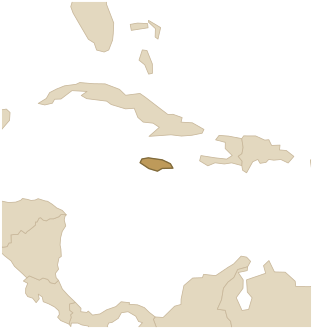
Jamaica is an island in the Greater Antilles, south of Cuba, and the third largest in the Caribbean. Fewer than three million people live there, the great majority of African descent; the capital is Kingston. Through its music, reggae, its athletes and a culture that has spread around the world, Jamaica counts for far more than its size.
Geography
The island is green, mountainous and forested. In the middle rise the Blue Mountains, misty peaks where one of the most sought-after coffees in the world is grown. All around, the land drops toward the sea through hills, rivers and waterfalls, such as Dunn's River Falls, down to white-sand beaches fringed with reefs, from Montego Bay to Negril. The hot, humid tropical climate feeds lush vegetation; like its neighbours, the island lies in the path of hurricanes.
History
Settled by the Taíno, the island was colonised by Spain in the early 16th century and then conquered by England in 1655. The British turned it into a vast sugar plantation, one of the most profitable in the world, built on the labour of hundreds of thousands of enslaved Africans. Jamaica was also a land of resistance: in the mountains the Maroons, people who had escaped slavery, held out against the English and forced them to recognise their freedom by treaty in 1739. Slavery ended in 1838, and after more than another century of colonial rule and struggle, the island became independent in 1962, while staying in the Commonwealth.
Language and faith
The official language is English, but in daily life Jamaicans speak Patois (Jamaican Creole), a language born of English and African languages, full of imagery, which music has carried around the world. The island is deeply Christian; it is said to have more churches per square mile than any other country. It is also the birthplace of Rastafari, a spiritual movement that celebrates African roots, honours Ethiopia and gave reggae its message of faith, dignity and freedom.
Culture and way of life
Jamaica gave the world reggae, born in the neighbourhoods of Kingston and carried by the voice of Bob Marley, which became a worldwide anthem of peace and resistance and is on UNESCO's intangible heritage list; ska, rocksteady and dancehall, also born here, have spread everywhere. It is also the home of the fastest sprinters on the planet, such as Usain Bolt. At the table there is jerk, spiced meat grilled over a wood fire, ackee and saltfish, the national dish, rice and peas, and tropical fruit.