Jersey
The largest of the Channel Islands, close to the French coast but attached to the British Crown, one of the last pieces of the old Duchy of Normandy, with huge tides and a prosperous economy.
+ Jèrriais (Norman), French
At a glance
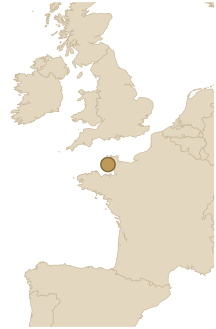
Jersey is the largest and southernmost of the Channel Islands, only about twenty kilometres off the coast of Normandy but much further from England. Even so, it is a self-governing British Crown dependency, part of neither the United Kingdom nor the European Union, with its own parliament and its own laws. About a hundred thousand people live there, around Saint Helier. Together with Guernsey, it is one of the last pieces of the old Duchy of Normandy still attached to the English crown, and its Norman heritage reaches into its language. A sunny island, a prosperous financial centre and a seaside resort, it keeps an identity of its own, between France and England.
Geography
Jersey is a small island tilted toward the south, which gives it plenty of sun and a mild climate. In the south there are long sandy beaches and sheltered bays; in the north, high cliffs drop into the Channel, with paths along the top. The island is famous for its tides, among the biggest in the world: at low tide the sea goes out a very long way, uncovering huge rocky flats. The rolling green interior is a patchwork of small fields and orchards, Jersey cows, the well-known dairy breed, manor houses and villages. The mild, temperate climate allows almost Mediterranean plants to grow.
History
Joined to the Duchy of Normandy in the 10th century, the island followed William the Conqueror's fortunes when, in 1066, the Duke of Normandy became King of England. In 1204, when the King of France took back mainland Normandy, Jersey and the neighbouring islands stayed loyal to the King of England, so that a piece of old Normandy remained attached to the Crown. For centuries the island lived from farming, fishing and coastal trade. In the Second World War the Channel Islands were the only British territory in Europe occupied by Germany; Liberation Day, 9 May 1945, is celebrated every year. Now a prosperous financial centre, Jersey keeps its self-government and its old institutions.
Language and faith
Jersey's language today is English, but the island has a historic language, Jèrriais, a form of Norman dating from the Middle Ages, long spoken by everyone, now endangered but defended and taught again. French was long the official language and is still present in the law. The island's tradition is Christian, divided between Anglicanism and Methodism, which was once very strong. Its twelve parishes, the old framework of its local government, and their churches carry this heritage, in a society that is now largely secular.
Culture and way of life
Jersey culture mixes Norman and British heritage. You can see it in place names and family names, French and Norman, in the twelve parishes and their traditions, and in old customs such as the Visite du Branchage. The island's big festival is the Battle of Flowers, a parade of floats covered in flowers. Life is lived between sea and countryside: sailing, shore fishing on the great tidal flats, manor houses and their gardens. The food draws on sea and land: oysters and ormers, new potatoes (the Jersey Royal), and butter and cream from the island's cows.