Saint Lucia
A volcanic island in the Lesser Antilles famous for its twin peaks, a Creole land shaped by both England and France, and home to two Nobel laureates.
+ Saint Lucian Creole
At a glance
Saint Lucia is a volcanic island in the Lesser Antilles, in the heart of the Caribbean. Its image is known around the world: two forest-covered cones rising straight out of the sea, the Pitons, the national emblem and a UNESCO World Heritage site. About 180,000 people live there, mostly of African descent; the capital is Castries. The island changed hands fourteen times between the French and the English, which is why its culture is English-speaking but deeply Creole. It has produced two Nobel laureates, an often-cited record for its population.
Geography
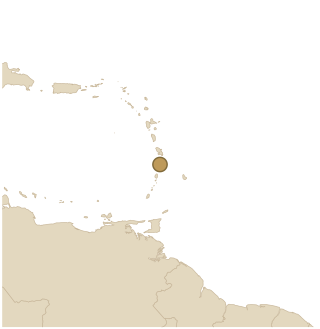
Saint Lucia is a mountainous, deep green volcanic island. Its best-known sights are the Pitons, two volcanic spires above the sea near the town of Soufrière, one of the most photographed views in the Caribbean. Nearby you can visit a volcano, with hot springs and sulphurous vents. The interior is covered in rainforest, waterfalls and banana plantations; the coasts have sandy beaches, often dark volcanic sand. The hot, humid tropical climate feeds lush vegetation; the island lies in the path of hurricanes.
History
Home to Amerindian peoples, Saint Lucia was fought over so fiercely by France and England that it changed hands fourteen times, earning it the nickname "Helen of the West Indies". The settlers built a sugar economy on the labour of enslaved Africans, from whom most of the population descends. British from 1814, the island became independent in 1979. It has produced two Nobel laureates: the economist Arthur Lewis, in 1979, and the poet Derek Walcott, winner of the Nobel Prize in Literature in 1992, who wrote about the Caribbean and its mixed memory.
Languages and faith
The official language is English, but the everyday language for much of the population is Saint Lucian Creole (Kwéyòl), a French-based Creole left over from the long periods of French rule. Saint Lucia is mostly Catholic, another French legacy, with feasts for patron saints, alongside Protestant churches. As everywhere in the Caribbean, cultural traditions of African origin live on.
Culture and way of life
Saint Lucian culture is Creole, with a double English and French heritage. It celebrates itself on Jounen Kwéyòl, Creole Day, devoted to the language, madras costumes, music and traditional food. There is also a well-known jazz festival, carnival, and the festivals of the traditional La Rose and La Marguerite societies. The food centres on green fig and saltfish (green banana and salt cod), the national dish, along with fish, breadfruit and spices.