Saint Martin
The French half of an island shared with the Netherlands, a Creole territory in the Antilles, with beaches and lagoons, where two nations share the same land.
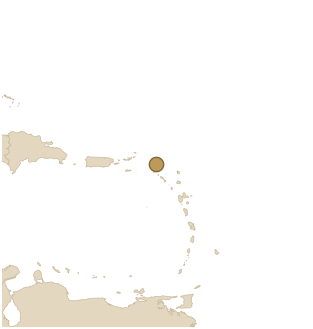
northern part of the island of Saint Martin
+ English, Creole
At a glance
Saint Martin is the French part of the island of the same name in the Lesser Antilles, whose southern half is Dutch (Sint Maarten). For nearly four centuries the little island has been shared peacefully between two nations, with no visible border. A French overseas collectivity, the northern part has about 32,000 inhabitants; the main town is Marigot. A Creole, cosmopolitan island known for its beaches, its food and its mix of French and Caribbean life, Saint Martin has a mixed population, mostly Afro-Caribbean, drawn from all over the Antilles.
Geography
Saint Martin covers the north of a small, hilly, dry island in the Antilles, with scrub-covered hills rising to Pic Paradis. The ragged coastline is lined with many beaches and bays among the finest in the Caribbean, such as Orient Bay, and with lagoons and salt ponds rich in birdlife. Small islets dot the turquoise water around it. The hot, dry tropical climate leaves it exposed to hurricanes: Hurricane Irma devastated it in 2017.
History
Home to Arawak and later Kalinago peoples, who are said to have called it Soualiga, "land of salt", Saint Martin was divided in 1648 between France and the Netherlands by a well-known agreement. The settlers worked salt and sugar cane with the labour of enslaved Africans, from whom most of today's population descends. After abolition in 1848 the island lived modestly, until tourism and its free-port status turned it into a prosperous, cosmopolitan crossroads in the 20th century. Long attached to Guadeloupe, the French side became a separate overseas collectivity in 2007.
Language and faith
In Saint Martin, French is the official language, but English and Creole are very widely spoken day to day, reflecting the island's history and a population drawn from across the Antilles; Spanish is heard too. The island is mostly Christian, divided between Catholicism and many Protestant and evangelical churches, which are very active in Afro-Caribbean communities.
Culture and way of life
Saint Martin's culture is Creole and Caribbean with a French touch. There is zouk, calypso and soca, carnival, festivals and regattas. Life is spent between the beaches, the colourful market in Marigot and well-known restaurants, which have earned the village of Grand Case the nickname "gourmet capital of the Caribbean". The food blends Creole and French traditions with seafood: accras, grilled fish and spiny lobster, colombo curry, and johnny cakes from the English-speaking side.