Niger
A vast country of the Sahel and the Sahara, home of the Tuareg and the great river, a crossroads of caravans between sub-Saharan Africa and the desert.
+ French
At a glance
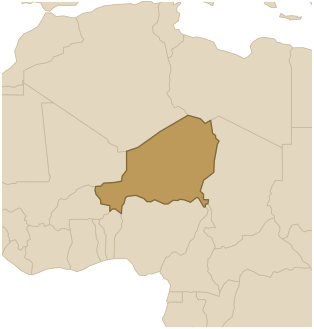
Niger is a huge landlocked country in West Africa, one of the largest on the continent, but two-thirds of it lies in the Sahara. Life is concentrated in the Sahel belt of the south and along the great Niger river, which gives the country its name and flows through the capital, Niamey. About 27 million people live there, from several peoples (Hausa, Zarma, Tuareg, Fulani), in one of the countries with the youngest populations in the world. A land of caravans and old learning, Niger is a crossroads between sub-Saharan Africa and the world of the desert.
Geography
Niger is dominated by desert. In the north and centre stretch the sands and plateaus of the Sahara, including the Aïr mountains, dark peaks dotted with oases, and the vast Ténéré, one of the driest places on Earth. The wetter south is the Sahel savanna belt, where farming, herding and most people are found. The Niger river crosses the west of the country, cutting a green and vital valley. The hot, dry climate makes every rainfall an event.
History
For centuries the territory was a crossroads of the great Sahel empires (Songhai, Kanem-Bornu) and of trans-Saharan trade: the city of Agadez, on the edge of the desert, was a major stop for caravans trading gold, salt, dates and cloth between North Africa and sub-Saharan Africa. The Tuareg, the "blue men" of the desert, controlled the routes. Colonised late and with difficulty by France, the country became independent in 1960. Despite its mineral wealth, uranium above all, Niger still faces great challenges of development, climate and security; the army has ruled since the 2023 coup.
Languages and faith
Niger is multilingual: Hausa, a great trade language of West Africa, Zarma, the Tuareg's Tamasheq, Fulfulde and other languages share the country; French, inherited from colonial rule, was long the only official language. Niger is overwhelmingly Sunni Muslim, with an old Islam that came with trans-Saharan trade and is often shaped by the Sahel's Sufi brotherhoods. Animist traditions survive in places.
Culture and way of life
Nigerien culture blends the worlds of the Sahel and the desert. There are the Tuareg, their men veiled in indigo, their engraved silver jewellery, including the famous Agadez cross, their camels and their camps. Among the Wodaabe Fulani there is the Gerewol, a beauty contest in which young men, made up and adorned, dance to win partners. There is leather and silver craft, desert music and big cattle markets. Life revolves around millet, the staple food, and shared tea.