Nauru
The smallest republic in the world, a single phosphate island in the middle of the Pacific, whose history is a dizzying tale of wealth and collapse.
At a glance
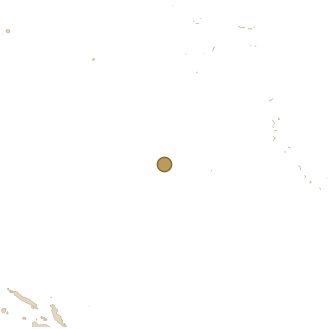
Nauru is the smallest republic in the world and the smallest island state: a single coral island of twenty-one square kilometres, isolated in the middle of the Pacific, just south of the equator. About twelve thousand people live there. Unusually, the country has no official capital. The island held a deposit of very pure phosphate that for a time made it one of the richest countries in the world per person, until the resource ran out and a ravaged island plunged it into a brutal decline.
Geography
Nauru is a small raised coral plateau, ringed by a narrow coastal strip, where everyone lives under the coconut palms, and by a reef. The heart of the island, "Topside", has been devastated: a century of phosphate mining scraped the land down to a moonscape of bare limestone pinnacles, leaving much of the island barren and uninhabitable. Around it, the Pacific is still rich in fish. The equatorial climate is hot and often dry, and restoring the mined land remains an enormous task.
History
Settled thousands of years ago by Austronesian and Micronesian seafarers and organised into twelve clans (recalled by the twelve points of the star on the flag), the island, nicknamed "Pleasant Island" by sailors, was annexed by Germany in 1888; a rich phosphate deposit was found there in 1900. For nearly a century it was mined intensively, first for the benefit of foreign powers. At independence in 1968 Nauru took control of it and became very rich; then, with the island exhausted and the money squandered, it suffered a spectacular economic collapse. Since then the country has lived on foreign aid and on an offshore detention centre for asylum seekers run for Australia.
Language and faith
People speak Nauruan, an Oceanic Austronesian language of its own, alongside English, the language of business and government. The country is overwhelmingly Christian, Protestant and Catholic since the missionaries arrived, and faith is central to community life. It has blended with the traditional values of the extended family and the clans, which remain the foundation of Nauruan society.
Culture and way of life
Nauruan culture is that of a small Pacific island people, organised around the family and the twelve traditional clans, passed down through women. An old custom survives: frigatebird catching, in which the birds are caught and tamed. There are also songs, dances and stories passed down orally, and weaving. Life revolves around the sea and fishing, done from canoes and once with fish raised in ponds, and around the coconut. Despite a troubled history and serious health and environmental challenges, the Nauruan people keep their identity and their clans.