Sint Maarten
The Dutch half of an island shared with France, the smallest inhabited island divided between two nations, and a cosmopolitan Creole crossroads of the Caribbean.
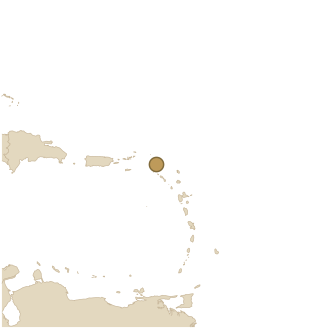
southern part of the island of Saint Martin
+ Creole, Spanish
At a glance
Sint Maarten is the Dutch part of the island of Saint Martin, in the Lesser Antilles, whose northern half is French: it is the smallest inhabited island in the world shared between two states, with a border agreed peacefully in 1648. An autonomous country within the Kingdom of the Netherlands, the Dutch side, the more populous one, has about 44,000 people; the capital is Philipsburg. A lively, cosmopolitan island, known for the airport where planes skim the beach, its casinos and its duty-free shopping, Sint Maarten brings together people from all over the Caribbean and the world.
Geography
Sint Maarten covers the south of a small, hilly Caribbean island, with dry, scrub-covered hills ringed by beaches and bays. Philipsburg stretches along a narrow strip of land between Great Bay and an old salt pan, the Great Salt Pond. To the west lies a large inland lagoon, Simpson Bay Lagoon, shared with the French side and one of the largest in the Caribbean, where yachts anchor. The hot, dry tropical climate leaves the island exposed to hurricanes: Irma devastated it in 2017.
History
Home first to Arawak and then to Kalinago Amerindians, the island was divided in 1648 between the French and the Dutch by the Treaty of Concordia, and the split has lasted ever since; legend says the border was drawn by two walkers setting off back to back. Both powers worked the salt ponds and sugar cane with the labour of enslaved Africans, from whom most of the population descends. After abolition (1848 on the French side, 1863 on the Dutch side), the island lived modestly on salt, fishing and livestock until tourism took off in the 20th century and drew migrants from across the Caribbean. In 2010 the Dutch side became an autonomous country within the kingdom.
Language and faith
In Sint Maarten the language of daily life is English, which is official alongside Dutch; Spanish and Creole are also widely heard, a sign of a population that has come from everywhere. The island is mostly Christian by tradition, split between Catholicism and various Protestant and evangelical churches that play a big part in neighbourhood life.
Culture and way of life
Sint Maarten's culture is Creole, Caribbean and cosmopolitan. People listen to calypso, soca and reggae, and the big carnival is the high point of the year. Life is spent between beaches, market, casinos and shops, and dozens of nationalities bring their own traditions. The cooking combines Caribbean, Creole and Dutch flavours: johnny cakes, fish and seafood, callaloo and spicy island dishes.