Vanuatu
A volcanic archipelago in Melanesia, land of active volcanoes and the Naghol land dive, and one of the most linguistically diverse places in the world.
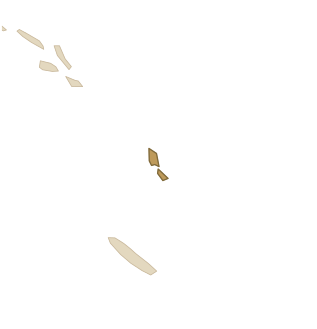
At a glance
Vanuatu is an archipelago in the South Pacific, in the heart of Melanesia, made up of 83 volcanic islands strung out in a chain. A little over 300,000 people live there; the capital is Port Vila. Its linguistic diversity is extraordinary: more than a hundred languages are spoken, the highest number of languages per person on the planet. A land of active volcanoes and living custom (kastom), it has several times topped indexes of national "happiness", and it keeps a very traditional, communal way of life.
Geography
Vanuatu is a young volcanic archipelago on the Pacific Ring of Fire: its mountainous islands, covered in rainforest, have several active volcanoes, including famous Yasur on Tanna, whose rumbling, glowing crater you can approach. All around are lagoons, coral reefs, beaches and waterfalls. It is also one of the countries in the world most exposed to natural disasters: eruptions, devastating cyclones and earthquakes, such as the one that struck Port Vila in December 2024.
History
Settled about three thousand years ago by Austronesian navigators of the Lapita culture, later joined by people from Melanesia, the archipelago developed many clan societies. In the 19th century it suffered from "blackbirding", the kidnapping of islanders to work by force on plantations in Australia and Fiji. Vanuatu then had a unique colonial status: a condominium run jointly by France and Britain, with two parallel administrations, which left the country its three official languages. The archipelago, then called the New Hebrides, became independent in 1980 as Vanuatu. It was Vanuatu that persuaded the UN to ask the International Court of Justice to rule on states' obligations on climate change; the court gave its opinion in 2025.
Languages and faith
Vanuatu has more than a hundred indigenous languages for a very small population. To understand each other, people speak Bislama, an English-based creole and the national language, co-official with French and English. The country is mostly Christian, with a lively faith brought by missionaries. But kastom, custom, with its spirits, ancestors and rites, remains very strong; on Tanna, movements such as John Frum even turned their backs on the missions.
Culture and way of life
Vanuatu's culture is that of kastom, which has kept rare vitality. Its best-known rite is the Naghol, the "land dive": on Pentecost Island, men jump from wooden towers more than twenty metres high, with vines tied to their ankles, to honour the yam harvest; this ancestral ritual inspired modern bungee jumping. There is also kava, a ceremonial drink shared in the evening, along with dances, slit drums and masks. Life is organised around the village, the clan, customary land and the garden: yam, taro, pig, fish.